RV Emergency Flasher
Make a simple roadside and campground emergency beacon for under $5.
Let's say you're cruising down the freeway on your way home from a well-earned, relaxing weekend with your RV in tow. Suddenly, a problem comes up and you have to leave your rig on the side of the road in the dark of night. Once you disconnect your trailer from the tow vehicle, it is practically invisible to approaching traffic due to a lack of emergency lighting.
A simple device that just about anyone can put together for a few dollars ensures your rig stays brightly lit. It flashes all of your trailer's clearance and running lights so your RV can be seen from a long way off—and you can build it yourself in seconds.
Parts Required
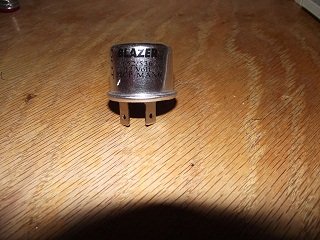
- One standard 12V two-prong 552/536 automotive flasher unit with two bladed connections (available online or at any auto parts store).
How It Works
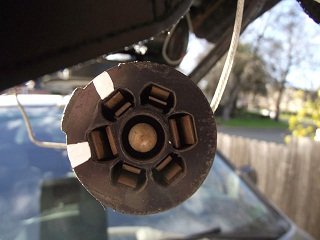
When you plug the two-prong flasher into your 7-way trailer cord plug, 12-volt power from your trailer's house battery (the Black 12V+ terminal) is routed through the flasher and into the Green running-light terminal. That makes all of your trailer's clearance and marker lights flash on and off—letting you safely leave your rig at night if you need to make an emergency run with the tow vehicle.
Medical, Fire, or Police Emergencies in a Campground
Frank from the Woodall's forum shared this great real-world tip on why every RVer should keep one of these on hand:
"Having been in the Fire Service in a very rural area for over 32 years, I can tell you that just finding the location of the incident is more than half the battle. While we always had great 'run book' maps, they would often get us to the front gate of a campground or RV park—not to the exact campsite or space inside. That is especially critical after dark, when everyone involved is inside the RV attending to a patient or a fire.
There's a simple way to help responding personnel find you faster and increase your chances of survival in a medical, fire, or police emergency: make your RV's lights flash!"
- Plug a 12V 552/536 flasher into your 7-way trailer cord.
- Tell the 911 dispatcher to have incoming units look for the RV with the flashing lights.
- Send anyone not directly helping with the emergency out to the road to flag down first responders.
Setting It Up Before You Need It
Buy a 552/536 flasher (about $4–$5) and tape it right to the trailer tongue or king pin bracket. Mark the outside of the tape clearly so anyone in your family can find it in the dark.
Next, mark the two slots on the end of your 7-way trailer cord so there is zero guesswork in an emergency. When you need it, simply plug the two flasher prongs into the marked holes.
Practice it once with your family. The time to figure out which two slots to use is not during a real emergency. Walk through it together once—it takes two minutes, and it's actually fun to test in the dark when your whole RV lights up and starts flashing. As Frank puts it: "This is literally a $4 life insurance policy!"
Tech Tip: Always test your flasher on your specific trailer before you need it. Older thermal flashers rely on electrical load from incandescent bulbs—if your trailer has been upgraded to all-LED clearance lights, pick up an electronic 2-prong LED-compatible flasher instead so it flashes reliably. Also double-check your 7-way plug wiring, as a few older trailers use slightly different color codes.
See also:
- Emergency RV Checklist – Essential tools and roadside emergency supplies.
- RV Wheel Chocks & DIY Stabilizers – Stopping the "rock and roll" movement in your parked trailer.
- RV Carbon Monoxide Safety & Detector Guide – Protecting your rig from invisible CO buildup.
- RV Storage Compartment Locks & Security – Upgrading CH751 locks and adding compartment lighting.